Logitech

Choosing a Video Conferencing Equipment Bundle

A meeting room can have a premium display, fast network connection, and a capable conferencing platform yet still deliver a poor experience if the camera misses half the table or the microphone picks up more air-conditioning than conversation. A properly specified video conferencing equipment bundle solves those gaps by bringing the core devices together as one compatible room solution.

For IT managers and procurement teams, the appeal is not simply convenience. Bundling can reduce compatibility risk, simplify purchasing, standardize the user experience across sites, and make support far easier after deployment. The right bundle also avoids a common expensive mistake: buying consumer-grade peripherals that work in a test call but fail under the demands of a busy boardroom, hybrid classroom, or shared meeting space.

What a Video Conferencing Equipment Bundle Should Include

At its most practical, a video conferencing equipment bundle combines the camera, audio hardware, compute or room controller, and display connection required to run meetings professionally. The exact configuration depends on room size, meeting platform, and how people use the space.

A small huddle room may only require an all-in-one video bar, a display, and a single USB connection to a laptop. A dedicated Microsoft Teams Rooms or Zoom Rooms space is more likely to need an appliance or compute unit, touch controller, camera, microphones, speakers, and commercial display. Larger rooms can add expansion microphones, a separate PTZ camera, a second display, wireless content sharing, and professional installation.

The best bundles are designed around a complete signal path. Participants need to be seen, heard, and able to share content without searching for cables, changing display inputs, or calling IT before every meeting. That is why the lowest initial hardware price is not always the best commercial outcome. A solution that reduces failed meetings, support tickets, and replacement purchases can offer much better long-term value.

Start With the Room, Not the Product Page

The room should drive the specification. Before comparing cameras or platforms, establish the table layout, room dimensions, typical attendee count, display location, lighting conditions, and whether users join from a dedicated room account or their own laptops.

Small rooms and huddle spaces

For spaces seating two to six people, an integrated video bar is often the most efficient option. These devices combine a wide-angle camera, microphones, and speakers in a compact unit. They reduce cabling and present a clean setup for rooms where the farthest participant is only a few feet from the device.

However, wide-angle does not automatically mean better. Extremely wide lenses can make faces at the end of a long table look distant, while low camera placement can create unflattering sightlines. Choose a bundle with framing features suited to the room and place the bar at an appropriate height below or above the display.

Medium conference rooms

Rooms seating six to 12 people often benefit from a more capable video bar or a modular system with a dedicated camera and table or ceiling microphones. Audio coverage becomes the critical factor here. The system needs to capture soft-spoken participants at the far end of the room while controlling echo and background noise.

For these rooms, consider whether the table shape, glass walls, and hard surfaces will affect acoustics. Expansion microphones may be a better investment than a higher-resolution camera if remote participants currently struggle to follow the discussion.

Boardrooms, training rooms, and divisible spaces

Large rooms demand a more deliberate design. A PTZ camera can frame speakers accurately from a distance, while multiple microphones or professionally installed audio coverage ensures every voice is captured. Dual displays are often worthwhile where teams need to view remote participants and shared content simultaneously.

This is also where installation and integration support matter most. Cable pathways, display mounting, network readiness, control systems, and room scheduling panels can all affect the final result. A bundle for a boardroom should be treated as a workplace technology project, not a carton of peripherals.

Choose the Platform Before Selecting the Hardware

A bundle should support the platform your organization actually uses, whether that is Microsoft Teams, Zoom, Google Meet, or a mixed environment. Platform-certified hardware gives buyers greater confidence that controls, updates, account management, and call features will work as intended.

Dedicated room systems are ideal for organizations that want walk-in, tap-to-join meetings. They provide a consistent experience and can be centrally managed across multiple locations. The trade-off is that they require room licenses, network configuration, and a clear ownership model for updates and support.

USB-based bundles remain a strong choice for flexible spaces and businesses where users host meetings from laptops. They can cost less and work with many conferencing applications, but the user experience depends on each person connecting their device correctly. For a high-turnover meeting room, that additional friction can quickly become a productivity issue.

Bring-your-own-device rooms can also be paired with wireless content sharing or a one-cable connection hub. This approach suits organizations with multiple conferencing platforms, but it should be tested against security policies, guest access requirements, and the range of laptops employees use.

Prioritize Audio Before Camera Resolution

Buyers often lead with 4K camera requirements. High resolution has value, particularly in larger rooms, but clear audio is usually the difference between a productive hybrid meeting and one where remote attendees disengage.

Look for microphones designed for the room’s coverage area and for audio processing features that manage echo, noise, and competing voices. In a small room, an integrated bar may be enough. In a long boardroom, microphone expansion and speaker placement should be assessed as part of the bundle, not added only after complaints begin.

Camera selection should then reflect room geometry. Consider field of view, optical versus digital zoom, framing modes, privacy shutters, and the ability to show a presenter at a whiteboard. A PTZ camera is useful when the camera must reach across a large room. In compact spaces, it may be unnecessary complexity compared with an intelligent video bar.

Standardization Makes Multi-Site Procurement Easier

Organizations with several offices, campuses, or meeting room types gain real value from standardizing their video conferencing equipment bundles. A consistent camera and controller experience reduces training needs. IT teams can hold fewer spare parts, document fewer support processes, and manage firmware updates more predictably.

Standardization does not mean forcing one bundle into every room. A better approach is to establish two or three approved room designs: huddle, standard meeting room, and large boardroom or training space. Each design can use the same platform and operating model while scaling camera, audio, and display requirements to fit the environment.

When comparing suppliers, ask whether they can quote these designs as repeatable packages. The ability to source recognized brands, maintain configuration consistency, and coordinate delivery across locations can remove a major procurement burden.

Check the Details That Cause Deployment Delays

A bundle can look complete on paper but still miss components needed for a working installation. Confirm display mounts, cables, adapters, network requirements, power access, and any required licenses or room accounts. If the system will be installed in a wall-mounted display area or table box, cable lengths and equipment placement need to be planned before the order is placed.

Also review warranty coverage, local support options, and the process for technical troubleshooting. For commercial environments, fast replacement pathways and qualified assistance are often more valuable than saving a small amount on an unsupported device.

For organizations buying in Australia, e365 SuperStore can support the process with competitive commercial quotes, recognized conferencing brands, Australia-wide delivery, and technical guidance for room-based deployments. That combination is particularly useful when procurement needs a single source for hardware supply and installation coordination.

Buy for the Meeting Experience You Want to Repeat

The right bundle is not the one with the longest specification sheet. It is the one that lets a first-time user enter a room, start a meeting quickly, hear every participant, share content clearly, and leave without creating a support ticket.

Specify the room experience first, match the bundle to the conferencing platform and acoustic needs, then validate the practical installation details. That process gives your teams a room they will choose to use, rather than another space with expensive technology sitting idle.

Choosing an Office Headset for Teams Calls

A poor headset is rarely just a personal annoyance. On a busy Microsoft Teams call, it becomes background noise for customers, repeated questions for colleagues, and a distraction that slows decisions. The right office headset for teams calls gives every user a clearer voice, a more consistent experience, and fewer support issues across the workday.

For IT and procurement teams, the buying decision is not simply wired versus wireless. It is about matching microphone performance, wearing style, connection type, certification, and management capability to the way each team actually works. A headset that suits a quiet finance office may be a poor fit for a contact center, shared workspace, or home-based sales team.

Start with the calls your team actually makes

The best headset specification starts with environment and call pattern. Staff who take occasional internal calls from assigned desks have different needs than people spending six hours a day in customer meetings. Standardizing on one model can simplify purchasing and support, but it should not mean forcing every user into the same compromise.

Consider the places where calls happen. An open-plan office needs stronger microphone noise reduction than a private office. A hybrid employee may need Bluetooth flexibility for a laptop and mobile phone. Contact center and reception teams often benefit from a wired USB headset because it is dependable, always charged, and simple to replace between shifts.

Also look at the communication platform. A headset built for Microsoft Teams should provide reliable call control, clear status feedback, and consistent behavior when users join meetings, answer calls, or mute themselves. Teams-certified models are designed to work with the platform’s calling features and commonly include a dedicated Teams button for notifications or meeting access. Certification reduces compatibility uncertainty, particularly when buying at scale.

How to choose an office headset for Teams calls

Put microphone quality ahead of speaker specifications

Buyers often compare audio output first, yet the microphone has a greater effect on how professional a caller sounds. Look for models with multi-microphone arrays, noise-canceling boom microphones, and voice-focused processing. These features help reduce the impact of nearby conversations, keyboard noise, air conditioning, and general office activity.

There is a trade-off. The strongest noise-filtering microphones can make a voice sound slightly more processed in very loud spaces. For most business environments, that is preferable to allowing office noise into a client conversation. For executives or content-heavy roles where natural vocal tone matters, test a shortlist in the real environment before committing to a fleet purchase.

A boom microphone remains the most dependable option for people who speak frequently on calls. Its position close to the mouth provides a more consistent signal than compact earbuds or headsets with hidden microphones. Discreet designs may suit occasional users, but they are not always the best choice for all-day business communication.

Choose a wearing style people will keep using

A technically excellent headset delivers little value if employees leave it in a drawer. Comfort is central for teams that spend long periods on Teams calls. Weight, clamping force, earpad material, headband adjustment, and heat buildup all affect acceptance.

Mono headsets leave one ear open to the room, making them useful for reception desks, office administrators, and workers who need awareness of colleagues nearby. Stereo headsets improve concentration and are usually the stronger choice for focused work, busy offices, and frequent video meetings. Some users prefer an on-ear design for a lighter feel, while others need over-ear cushions for better passive noise isolation.

For larger deployments, avoid treating comfort as an abstract product claim. Let representative users trial the preferred models, including people who wear glasses, move between calls and desk work, or use headsets for several hours at a time. A small trial can prevent an expensive standardization mistake.

Select the connection for the workspace, not the marketing claim

Wired USB headsets remain a highly practical business option. They are plug-and-play, do not depend on battery management, and can provide consistent call controls on shared or fixed workstations. USB-A remains common in established desktop fleets, while USB-C is increasingly standard on newer laptops and docking stations. Confirm connector requirements before ordering.

Wireless Bluetooth headsets offer greater mobility and a cleaner desk setup. They are well suited to executives, sales staff, hybrid workers, and employees who move between a laptop, mobile phone, and office. A dedicated USB Bluetooth adapter can deliver more dependable call control and range than relying on a computer’s built-in Bluetooth, especially in dense office environments.

Battery life deserves a realistic assessment. Manufacturer figures are useful, but a full day of calls, active noise cancellation, and frequent device switching can reduce runtime. Charging stands make sense for assigned desks and executive users because they encourage predictable charging while presenting a more organized workstation. For shared spaces, wired units may still be the more operationally reliable choice.

Do not confuse active noise cancellation with microphone noise reduction

These technologies solve different problems. Active noise cancellation, often called ANC, reduces what the wearer hears. It can make it easier to focus in open offices, on commutes, or in a home workspace with background distractions. It does not necessarily improve how the wearer sounds to others.

Microphone noise cancellation reduces what call participants hear from the user’s environment. For Teams calls, this is usually the higher-priority feature. The most effective headset for a busy employee may include both: ANC for the wearer’s concentration and a noise-canceling microphone for clear outgoing audio.

Verify Teams certification and call controls

A headset can connect to a computer and still provide a frustrating Teams experience. Native call controls matter because they reduce missed calls, accidental mutes, and user confusion. Look for dependable answer/end controls, mute functions with clear visual or audible feedback, and a Teams button where the workflow supports it.

Teams certification also matters when rolling out equipment across a mixed Windows and Mac environment. Confirm the chosen model’s support for your operating systems, preferred Teams client, and any security or device-management standards. This is particularly valuable for organizations with limited internal support resources or multiple sites.

Plan the deployment, not just the purchase

The headset is only one part of a reliable collaboration environment. A strong rollout includes standard models by user type, compatible adapters and charging accessories, a replacement process, and clear guidance on firmware updates. These details determine whether a deployment remains easy to support six months later.

For example, a practical standard may include a wired USB headset for fixed desk and shared-desk users, a wireless stereo model for managers and hybrid professionals, and a premium ANC option for executives or high-noise roles. This gives employees appropriate choice without creating an unmanageable catalog of different devices.

Centralized headset management can be worthwhile for larger fleets. Supported management platforms can help IT teams review firmware status, apply updates, monitor device inventory, and configure settings consistently. It depends on the headset brand and organization size, but the operational benefit becomes clearer when hundreds of devices are in service.

Commercial buyers should also account for warranty terms, availability of replacement cushions or charging bases, and ongoing stock continuity. A low initial price is less compelling if the model is discontinued quickly or accessories become difficult to source. Established business headset ranges generally provide a more stable path for standardization than consumer-focused products.

Build a short, testable shortlist

Before ordering in volume, compare two or three models against the conditions that matter most. Run test calls in the open office, from a home workspace, and near the typical background noise sources. Check how easily users can answer, mute, and switch between devices. Ask whether the headset remains comfortable after a full morning of meetings, not just a five-minute demo.

Procurement should evaluate the total deployment cost as well: headset price, adapters, charging accessories, management needs, replacement parts, and support time. The lowest-cost model can create higher costs if call quality disappoints users or IT has to troubleshoot inconsistent connectivity.

For organizations purchasing across offices, classrooms, service desks, or hybrid teams, specialist advice can shorten the selection process. e365 SuperStore can help buyers compare professional headset options alongside the wider Teams workspace, including conference cameras, speakerphones, room devices, and installation requirements.

The most effective choice is the one employees can wear comfortably, IT can support confidently, and customers can hear clearly. Start with real user roles and real workspaces, then choose a Teams-certified headset range that makes every call feel more controlled and professional.

Choosing a Projector for Conference Room Use

A projector for conference room use is not a commodity purchase. It has to stay visible with lights on, connect quickly to the devices your team actually uses, and perform reliably when a client, executive, or remote participant is waiting. A low upfront price can become expensive fast if the image washes out, wireless sharing fails, or maintenance interrupts meetings.

The right choice starts with the room, not the product spec sheet. Screen size, ambient light, seating distance, video conferencing requirements, and installation constraints all determine which projector will deliver a professional result. For business buyers standardizing several spaces, those decisions also affect support workload, replacement planning, and total cost of ownership.

Start With the Conference Room, Not the Projector

Measure the usable presentation area before comparing models. A small huddle room may only need a 70-inch image, while a boardroom or training space may require 100 inches or more for spreadsheets, dashboards, and detailed presentations to remain readable from the back row.

Room lighting matters just as much. Conference rooms with blinds, controlled lighting, and darker finishes are easier to equip. Glass-walled rooms, open collaboration areas, and spaces where lights must remain on for note-taking need more brightness. Do not assume users will dim lights before every meeting. In most organizations, they will not.

Also consider the mounting position early. A ceiling-mounted projector can create a clean, permanent installation, but it requires the correct throw ratio and cable pathway. A short-throw model can work well in smaller rooms where the projector must sit close to the screen. Ultra-short-throw units reduce shadows and glare near the display surface, although they require careful alignment and a suitably flat screen or wall.

Match brightness to the way the room is used

Brightness is measured in ANSI lumens. It is one of the most meaningful specifications for a business projector, but more is not automatically better. Excess brightness can add cost and may be unnecessary in a controlled boardroom. Too little brightness, however, leaves presentations looking faded and forces users to close blinds or turn off lights.

As a practical starting point, a compact meeting room with moderate lighting may suit a projector in the 3,000 to 4,000 ANSI lumen range. Larger rooms, bright spaces, and rooms with substantial daylight often need 4,500 lumens or more. For training rooms or flexible commercial spaces, higher brightness can provide useful headroom when conditions change.

Brightness should be evaluated alongside screen size. The same projector that looks sharp on a 75-inch image may struggle when stretched across a 120-inch screen. Ask for recommendations based on the exact room dimensions and projected image size, rather than selecting on lumens alone.

Resolution Determines What People Can Read

Resolution affects more than video quality. In a business setting, it determines whether participants can read small text in a financial model, see details in a design review, or follow a shared application window during a hybrid meeting.

Full HD, or 1080p, remains a sensible option for many standard meeting rooms. It is cost-effective and handles presentations, video, and most collaboration tasks well. For boardrooms, large training rooms, and teams that frequently share dense spreadsheets or multiple windows, 4K is often the better investment. The extra pixel detail is particularly valuable when the projected image is large or viewers sit close to the screen.

Avoid treating native resolution and supported input resolution as the same thing. Some projectors accept a 4K signal but display it at a lower native resolution. That may be adequate for simple slides, but it is not equivalent to true 4K projection. Procurement teams should confirm the native display specification before comparing pricing.

Select the Right Light Source for Your Support Model

Lamp-based projectors can offer attractive purchase pricing, particularly where usage is limited. They also introduce a predictable maintenance requirement: lamps dim over time and eventually need replacement. That means downtime, consumables inventory, and service planning across multiple rooms.

Laser projectors have become the preferred option for many commercial deployments. Their light engines typically provide long operating life, consistent brightness over more hours, and faster start-up. The initial purchase cost is higher, but the reduced maintenance can make laser a stronger value over the life of the installation.

For a lightly used meeting room, a lamp model may still be commercially sound. For executive spaces, heavily booked rooms, education environments, and multi-site rollouts, laser technology usually reduces operational friction. The decision depends on projected hours of use, access to service personnel, and how disruptive a failure would be.

Connectivity Must Support Real Meeting Behavior

A projector can have excellent image performance and still frustrate users if sharing content is awkward. Start by identifying the devices and platforms in the room. A Windows laptop with HDMI has different requirements from a room built around USB-C laptops, wireless presentation, Microsoft Teams Rooms, Zoom Rooms, or a dedicated video conferencing appliance.

HDMI remains essential in most installations. USB-C connectivity can simplify modern laptop use, but verify whether the projector supports video input directly and whether charging is required through the same connection. In many room designs, a separate table connectivity hub or AV switcher provides a more reliable answer than relying on projector ports alone.

Wireless presentation is convenient for ad hoc meetings, yet it should be assessed carefully in managed networks. Security policies, guest access, Wi-Fi capacity, and device compatibility all influence the experience. A wired connection should remain available as a dependable fallback for high-stakes meetings.

If the projector will be paired with a conferencing camera, speakerphone, or room appliance, plan the full signal path. The projector is the visual endpoint, not the complete room solution. Proper integration ensures the room can switch between local content, remote participant views, and conferencing platforms without staff improvising with adapters.

Do not overlook audio and control

Built-in projector speakers may be adequate for a small room and occasional video playback, but they are rarely suitable for a professional boardroom. Dedicated speakerphones, ceiling speakers, soundbars, or DSP-based audio systems produce clearer speech and work better with video conferencing microphones.

Control is equally important. A projector installed on the ceiling should not depend on someone locating a remote control. Consider wall controls, touch panels, room scheduling panels, or centralized management tools. At minimum, confirm that authorized IT staff can monitor lamp hours, temperature alerts, firmware, and power status where supported.

Screen Choice Can Make or Break the Image

Projecting directly onto a painted wall is tempting, but it often compromises sharpness, color consistency, and perceived brightness. A commercial projection screen provides a more controlled surface and a more polished result for client-facing spaces.

The screen type should match the room. A standard matte white screen works well in many controlled environments. Ambient-light-rejecting materials can improve contrast in brighter rooms, but they cost more and may require stricter viewing-angle and projector-placement planning. Motorized screens are useful where a room serves multiple purposes, while fixed-frame screens are often the strongest option for dedicated presentation spaces.

Think about sightlines too. The bottom of the image should sit high enough for attendees at the back to see it over people seated in front. In rooms with video conferencing, leave space for the camera and display layout so remote participants are not obscured.

Plan for Installation, Service, and Standardization

Commercial AV performance is won during design and installation. Cable runs, ceiling mounts, ventilation clearance, power location, screen alignment, and network access should be planned before equipment arrives. A projector installed too close to an air-conditioning vent, without access for servicing, creates a long-term support problem.

For organizations equipping several rooms, standardization is worth prioritizing. Using a consistent platform across similar spaces simplifies user training, spare equipment planning, remote management, and help desk support. It also makes future expansion faster because the room design is already proven.

This is where specialist procurement support adds value. e365 SuperStore can help business buyers match commercial projectors, screens, conferencing hardware, audio, and installation requirements into a practical room solution rather than a collection of disconnected products. Technical guidance before purchase is often the fastest way to avoid an under-specified installation.

Questions to Ask Before You Approve the Quote

Before finalizing a projector for conference room deployment, confirm the required image size, room light levels, native resolution, throw distance, and mounting location. Confirm the expected daily operating hours and whether lamp replacement or laser longevity best fits the budget. Finally, validate how users will connect, how the room will support video conferencing, and who will service the equipment after installation.

The best conference room projector is the one people do not have to think about. When a meeting starts, the image should be bright, readable, correctly aligned, and ready for the next device or remote participant. Build the room around that standard, and the investment will keep earning its place long after the first presentation ends.

Best Ceiling Microphone for Meeting Room Use

A meeting room can look perfectly equipped on paper and still fail the moment someone at the far end says, “Sorry, can you repeat that?” In most cases, the issue is not the camera or the display. It is the pickup. Choosing the right ceiling microphone for meeting room use is often what separates a room that feels professional from one that drains time out of every call.

Ceiling microphones have moved from niche AV products to a serious standard for modern conferencing. That shift makes sense. Organizations want cleaner tables, fewer exposed cables, better room coverage, and audio that works for both in-room participants and remote attendees. But not every ceiling mic is right for every space, and this is where buyers often get stuck.

Why a ceiling microphone for meeting room projects makes sense

The biggest advantage is coverage without clutter. A ceiling-mounted solution removes the need to place tabletop mics where they compete with laptops, notepads, and room booking habits. In a shared or executive space, that matters. A clean table is easier to use, easier to maintain, and presents better on camera.

There is also a performance benefit when the system is designed properly. Many ceiling microphones use beamforming or multi-element arrays to focus on voices across the room rather than relying on a single pickup point. That helps in medium and large rooms where participants do not stay fixed in one seat.

Still, ceiling microphones are not automatic upgrades in every scenario. A small huddle room with two or three people may perform perfectly well with an all-in-one video bar. In those spaces, adding a separate ceiling mic can increase cost and complexity without a clear gain. The right decision depends on room size, ceiling height, table layout, acoustic treatment, and the conferencing platform in use.

What actually matters when choosing a ceiling microphone

Audio coverage comes first. Buyers should ask a simple question before looking at brand names or specifications: how many people need to be heard clearly, and from where? A compact boardroom with a fixed table has very different pickup requirements than a flexible training space where participants move around.

Beamforming quality is the next filter. Not all beamforming is equal. Some microphones track talkers effectively and maintain natural voice pickup. Others sound thin, distant, or inconsistent when people turn their heads or speak from the edge of coverage. Manufacturer claims can be optimistic, so it helps to assess real deployment conditions rather than brochure language alone.

DSP integration matters more than many first-time buyers expect. Echo cancellation, noise reduction, automatic gain control, and mixing all affect the final result. A strong ceiling microphone paired with weak DSP can still produce poor calls. In many commercial rooms, the microphone should be considered part of a wider audio chain that includes speakers, processing, and platform-certified hardware.

Then there is compatibility. If the room is standardized around Microsoft Teams Rooms or Zoom Rooms, the ceiling mic should fit cleanly into that environment. That includes USB, Dante, or networked audio workflows, depending on the room design. For enterprise buyers outfitting multiple spaces, consistency across platforms and room types can save significant support time later.

Ceiling microphone types and where they fit

Flush-mount and pendant designs are the two most common categories. Flush-mount microphones sit more discreetly in finished ceilings and are often preferred in polished boardrooms or architecturally sensitive spaces. Pendant microphones hang lower and can be useful where ceilings are high or pickup needs to be positioned closer to the talkers.

There are also array microphones designed to work with intelligent coverage zones. These are often the right choice for larger meeting rooms, divisible rooms, or training environments where standard pickup patterns may struggle. They usually cost more, but they can reduce the need for multiple tabletop microphones and support a more scalable room design.

For many buyers, the real choice is not just microphone style. It is whether to use a single advanced array, multiple ceiling units, or a hybrid system that combines ceiling pickup with supplemental microphones. The answer depends on how predictable the room usage is. Fixed board meetings are easier to design for than flexible collaboration spaces with shifting furniture.

The room itself will make or break performance

A ceiling microphone does not operate in isolation. Hard glass walls, exposed concrete, open ceilings, and reflective tables all influence speech intelligibility. If a room is highly reverberant, even premium hardware can sound underwhelming.

That does not mean every room needs a full acoustic retrofit. But buyers should at least factor in practical mitigation such as carpet, soft finishes, acoustic panels, and speaker placement. In many installations, a better result comes from balancing microphone choice with room treatment rather than simply buying the most expensive mic in the catalog.

Ceiling height is another practical issue. A microphone specified for a standard office ceiling may not perform the same way in a space with extra height or unusual geometry. This is one reason specification-driven purchasing can go wrong. The data sheet may look right, while the installed performance says otherwise.

Integration is where commercial value shows up

For business buyers, product cost is only part of the equation. The real question is total room outcome. A ceiling microphone that needs additional DSP, custom programming, and specialized installation may still be the right choice for a flagship boardroom. But for broad room rollouts, a more standardized solution can offer better long-term value.

This is especially relevant for organizations deploying multiple rooms across offices, campuses, or client-facing spaces. Procurement teams usually want fewer compatibility surprises, simpler support, and predictable quoting. IT teams want devices that can be managed, updated, and replaced without rebuilding the room each time.

That is where specialist supply matters. A commercial technology partner can help match the microphone to the broader room stack, including speakers, conferencing compute, control interfaces, cabling, and platform certification. That reduces the risk of buying premium components that do not play well together. For organizations purchasing at scale, e365 SuperStore supports this kind of solution-led approach with access to major brands, integration guidance, and deployment support.

Common buying mistakes to avoid

One of the most common mistakes is underestimating speaker placement. If room speakers are poorly positioned relative to the microphone pickup zone, echo control becomes harder and call quality drops. Another is assuming one microphone can cover every seat because the room dimensions appear modest. Coverage on paper and coverage in practice are not always the same.

Buyers also run into trouble when they prioritize aesthetics over performance. A hidden microphone can look great, but if it is mounted in a compromised location or too far from talkers, the room pays for that decision every day. Good design should support both appearance and intelligibility.

There is also a tendency to treat all meeting rooms the same. A boardroom, a training room, and a hybrid classroom may all need ceiling microphones, but they should not be specified identically. User behavior changes the design. So does the expectation of recording quality, voice lift, or presenter tracking.

How to tell if a ceiling microphone is the right fit

If your room needs clear table-free pickup, supports more than a few participants, or serves executive, client-facing, or high-usage meetings, a ceiling microphone is worth serious consideration. It is especially effective where organizations want a premium finish and a more permanent conferencing setup.

If the space is small, lightly used, or built around a compact video bar with good onboard microphones, the return may be lower. In those cases, keeping the system simpler can be the smarter commercial move. The goal is not to install more gear. The goal is to remove friction from every meeting.

The strongest meeting room designs usually start with user behavior, then move to room acoustics, then to hardware. That order helps buyers avoid overbuying in some spaces and underbuilding in others.

A ceiling microphone is not a box-check purchase. It is part of the room experience. When it is specified well, people stop thinking about audio entirely, which is exactly the result a professional meeting space should deliver. If your team is planning a new room, standardizing multiple sites, or upgrading underperforming spaces, take the extra time to get the audio layer right. It is usually the part users remember most when it goes wrong, and the part they never notice when it is done properly.

Microsoft Teams Room System Buyer’s Guide

Walk into a meeting where the camera misses half the table, audio drops every few minutes, and the display takes three remotes to start, and the problem is not the meeting platform. It is the room. A microsoft teams room system is designed to fix that gap between software and physical space, giving businesses a standardized way to run meetings that actually start on time and work as expected.

For IT teams, procurement leaders, and workplace managers, that standardization matters. It reduces support tickets, shortens training time, and makes it easier to roll out consistent meeting experiences across multiple rooms and locations. The challenge is that not every Teams room is the same, and not every package that looks good on paper is the right fit once it is installed in a real office.

What a Microsoft Teams room system actually includes

A Microsoft Teams room system is more than a camera and a speakerphone. It is a purpose-built room solution that combines compute, touch control, audio, video, and display integration around Microsoft Teams Rooms software. In practical terms, that usually means a dedicated room device, a console on the table, one or more room displays, a certified camera, microphones, speakers, and the mounting and cabling required to make the setup reliable day after day.

The reason businesses choose a dedicated room system instead of a bring-your-own-laptop setup is consistency. Users walk in, tap Join, and the meeting launches with the room camera, room microphones, and room display already configured. That may sound simple, but in busy environments simplicity is what keeps rooms usable.

There is also a management advantage. Certified Teams Rooms hardware is built for centralized administration, software updates, and a cleaner support model. If your organization is trying to standardize dozens of huddle spaces, conference rooms, boardrooms, or classrooms, that is a major operational win.

Why businesses are moving to standardized Teams rooms

Most organizations do not replace meeting room technology because they want something new. They replace it because ad hoc setups stop scaling. One room has a USB camera, another has a soundbar, another depends on a user bringing the right adapter, and none of them behave the same way. That inconsistency wastes time and creates avoidable friction for both staff and guests.

A microsoft teams room system solves that by creating a repeatable room design. Teams becomes the common experience, while the hardware is selected to match the room size and acoustics. For hybrid workplaces, that matters even more. Remote participants expect to hear clearly, see the room properly, and join without the meeting turning into a troubleshooting session.

There is also a procurement benefit. Standardized room bundles are easier to quote, deploy, support, and refresh. Instead of buying random components from multiple sources, organizations can work from approved configurations and scale faster.

Choosing the right Microsoft Teams room system for each space

The biggest mistake buyers make is treating every meeting room the same. A four-person huddle room and a twelve-seat boardroom may both run Teams, but their hardware requirements are different.

Small rooms and huddle spaces

In smaller spaces, an all-in-one video bar often makes the most sense. These systems combine camera, microphones, and speakers into a single front-of-room device, paired with a touch console and compute. They are easier to install, easier to manage, and usually more cost-effective than building a room from separate AV components.

The trade-off is coverage and expansion. If the room grows, or if furniture is moved further from the display wall, microphone pickup and camera framing can become limiting factors. For straightforward spaces, they are often the best value. For flexible rooms, it depends on how much change you expect over time.

Medium conference rooms

Medium rooms tend to be where selection becomes more strategic. You may still use a video bar, but many businesses move to modular systems with dedicated cameras, table microphones, ceiling microphones, or separate speakers. That gives better control over pickup range, speaker placement, and camera performance.

This is also where room layout starts affecting product choice. Glass walls, hard surfaces, long tables, and open ceilings can all change what works best. A system that looks ideal in a spec sheet may underperform if the room acoustics are poor.

Large rooms and boardrooms

For large rooms, executive spaces, and training environments, modular systems are usually the right path. You need stronger camera options, wider audio coverage, and often dual displays for content and participant views. In some cases, a single camera is not enough, especially when presenters move around the room or when audience visibility matters.

The installation is more involved, but so is the expectation. In these spaces, the room is part of how the organization presents itself to customers, partners, and leadership teams. Reliability and presentation quality matter just as much as platform compatibility.

Key hardware decisions that affect performance

When buyers compare Teams room packages, they often focus on price first. Price matters, but hardware fit matters more. The cheapest system becomes expensive very quickly if users stop trusting the room.

Camera quality should be evaluated based on field of view, framing intelligence, and how well it handles the actual room depth. A wide-angle lens is useful in tight rooms, but not every room needs it. In longer rooms, optical performance and participant framing become more important.

Microphones are often the make-or-break factor. If users cannot be heard clearly, the room fails, even if the video looks excellent. Table mics work well in many spaces, but ceiling microphones can improve flexibility and reduce tabletop clutter. The right choice depends on ceiling height, room noise, and installation budget.

Displays also deserve more attention than they usually get. Screen size, brightness, and placement affect how natural the meeting feels. If people are straining to read shared content or cannot maintain eye contact with remote participants, the room experience suffers.

Control is another practical issue. A dedicated touch console simplifies join workflows and gives users confidence. Rooms that rely on too many separate controls tend to generate more support calls.

Certification matters, but so does integration

Certified Microsoft Teams Rooms products are the safest starting point because they are validated to work with the platform. That lowers risk. It does not automatically guarantee a successful room, though, because the final result still depends on integration, mounting, cable management, network readiness, and physical room conditions.

This is where many business buyers benefit from working with a specialist instead of sourcing components one by one. Compatibility is only part of the job. The rest is deployment planning, installation quality, and post-sale support.

A room system should also fit your broader environment. If your business has existing displays, audio infrastructure, or scheduling panels, it may be possible to build around those assets. Sometimes that reduces cost. Other times, full replacement is the smarter move because it simplifies support and avoids mixed-vendor complexity. The right answer depends on room age, current equipment condition, and how standardized you want the estate to be.

Budgeting for a microsoft teams room system

There is no single price point that defines a good Teams room. Small-room kits can be very cost-effective, while executive rooms and training spaces can justify a much higher investment. What matters is total value over time.

That includes hardware cost, installation, user adoption, support overhead, and room uptime. A lower-priced bundle that does not suit the room can cost more through rework, accessory purchases, and lost productivity. A better-specified system may look more expensive upfront but deliver stronger value if it reduces failures and lasts through future room updates.

Businesses should also think in phases. If you are rolling out multiple sites, it can make sense to standardize two or three room profiles rather than create a unique design for every space. That speeds purchasing, improves user familiarity, and makes spare parts and support easier to manage.

For organizations comparing suppliers, service matters alongside price. Quoting accuracy, installation capability, warranty support, and access to certified advice can have a direct impact on project outcomes. That is why many buyers prefer a supplier that can support both procurement and deployment, rather than simply shipping boxes.

What to look for before you buy

Before selecting a system, assess the room itself. Count seats, measure room depth and width, note ceiling type, identify wall materials, and review network and power availability. Then consider how the room is actually used. Is it mainly internal meetings, client presentations, hybrid workshops, or executive calls? Usage should shape the specification.

It is also worth deciding how much control you want over the user experience. Some organizations want a standardized appliance approach with minimal variation. Others need modularity because their spaces serve multiple functions. Neither approach is wrong. The better option is the one that fits your support model, budget, and room turnover cycle.

If you are buying at scale, ask for room-by-room recommendations rather than a generic package. A strong supplier should be able to map hardware to room type, explain trade-offs clearly, and help you avoid overbuying in small spaces or under-specifying larger ones. That is the difference between buying technology and buying a working room.

At e365 SuperStore, this is where commercial buyers usually save time – not by guessing which kit might work, but by narrowing the choice quickly to the right certified solution for the space, budget, and rollout plan.

The best meeting rooms do not draw attention to themselves. People walk in, press one button, and get on with the work. That is what a well-chosen Teams room should deliver, and it is why getting the system right at the buying stage pays off long after the hardware is installed.

Best Speakerphone for Conference Calls

A conference call starts to fail long before anyone drops off the meeting. It usually starts when voices sound distant, side conversations disappear, or the far end keeps asking people to repeat themselves. If you are choosing the best speakerphone for conference calls, the real job is not buying a popular device. It is matching the microphone pickup, speaker output, platform compatibility, and room size to the way your business actually meets.

That matters because a speakerphone that works well on an executive’s desk can struggle badly in a six-person huddle room, and a model that sounds excellent in a small room may fall short in a boardroom with glass walls and a long table. Business buyers need more than a spec sheet. They need a reliable fit that reduces meeting friction, supports standardized deployment, and holds up under daily use.

What makes the best speakerphone for conference calls?

The short answer is clarity, consistency, and compatibility. The longer answer is that the best unit for your environment depends on four practical factors: room size, participant count, connection method, and your conferencing platform.

Microphone performance is usually the first thing to assess. A strong speakerphone should capture voices evenly across the intended pickup range without forcing people to lean in or raise their voices. Echo cancellation and noise reduction are also non-negotiable in business settings, especially in open offices or reflective rooms where HVAC noise, keyboard clicks, and hallway traffic can affect call quality.

Speaker quality matters just as much. If remote participants sound thin or strained, teams tend to increase volume, which can create feedback or listener fatigue. A business-grade speakerphone should deliver clear, natural playback at realistic meeting levels, not just acceptable sound at arm’s length.

Then there is connectivity. USB remains the safest option for predictable performance in dedicated meeting spaces, while Bluetooth can be useful for flexible rooms and hybrid work setups. Some organizations need both. Others need native support for Teams, Zoom, or UC environments to simplify call control and reduce user error. That is where product selection becomes a procurement decision, not just an audio decision.

Start with the room, not the product

The fastest way to choose badly is to shop by brand or price before defining the room. A small personal office, a four-person huddle space, and a medium conference room have very different audio demands.

Personal offices and focus rooms

For one or two users, compact USB or Bluetooth speakerphones often make sense. In these spaces, the priorities are ease of use, reliable pickup at short range, and portability. These models are ideal for hybrid staff who move between home, private offices, and touchdown spaces. They are generally cost-effective and easy to deploy at scale.

The trade-off is coverage. A compact unit may sound excellent for one person but underperform once more people join around a table. If your so-called personal office often becomes an ad hoc meeting spot, size up early rather than replacing hardware later.

Huddle rooms

This is where many businesses get caught out. Huddle spaces look small, so buyers often install entry-level units that are really built for desktops. But huddle rooms usually involve multiple voices, inconsistent seating positions, and mixed laptop use. That means microphone array quality becomes more important than portability.

For these rooms, the best speakerphone for conference calls is often a dedicated business model with wider pickup coverage, stronger echo control, and simple USB connectivity for room PCs or bring-your-own-device setups. If the room is used for Teams or Zoom every day, dedicated platform-certified hardware can reduce support issues and improve the user experience.

Medium conference rooms and boardrooms

Once the room gets larger, standalone speakerphones become more situational. Some premium models can handle medium rooms well, especially if they support expansion microphones or daisy chaining. But there is a limit. If the table is long, seating exceeds six to eight participants, or the room has poor acoustics, an all-in-one speakerphone may not deliver consistent pickup.

At that point, buyers should consider whether a more complete conferencing solution is the better investment. Ceiling microphones, table arrays, or integrated audio-video bars can provide better long-term performance and easier standardization across rooms. The cheapest option upfront is not always the lowest-cost path once user complaints and replacement cycles are factored in.

The features that actually matter

Not every feature on a product page deserves equal attention. Business buyers should focus on the capabilities that affect deployment, usability, and support.

Microphone pickup and voice processing

Look past marketing claims and focus on intended room coverage. Beamforming microphones, full-duplex audio, acoustic echo cancellation, and noise suppression all help maintain natural conversation. Full-duplex is especially important because it allows both sides to speak at once without audio cutting in and out, which makes meetings feel more like real conversation.

USB, Bluetooth, or both

USB offers stability and is easier to support in standardized meeting rooms. Bluetooth adds flexibility for mobile users and temporary spaces. For many organizations, dual connectivity is the right balance because it supports both fixed-room and BYOD workflows. The key is not having more options. It is having the right options for how employees actually connect.

Platform certification

If your company runs Microsoft Teams or Zoom Rooms across multiple spaces, certification matters. It improves interoperability, enables native controls on some devices, and reduces troubleshooting. In mixed-platform environments, broad UC compatibility can be the better choice. There is no universal winner here. It depends on whether your goal is standardization around one platform or flexibility across several.

Battery life and portability

For mobile professionals and shared spaces, battery-powered speakerphones can be useful. For permanent rooms, battery operation is less important than wired reliability. A portable unit is attractive, but if it spends all day in one room, a dedicated wired device is usually the safer business choice.

Manageability and support

This matters more in larger rollouts. If you are deploying across offices, classrooms, or shared meeting spaces, centralized management, firmware updates, and reliable vendor support become part of the buying decision. A device that sounds good but is difficult to maintain can create unnecessary workload for IT teams.

How to compare options without wasting budget

Price matters, but value matters more. The right comparison is not cheapest versus most expensive. It is fitness for purpose versus total cost of ownership.

A lower-priced speakerphone can be a smart buy for desks, remote staff, and low-use rooms. It becomes a poor buy if it fails in a critical client-facing conference room and needs replacement six months later. On the other hand, not every room needs premium enterprise audio. Overspending on simple spaces is just as inefficient as underspending on important ones.

A practical buying approach is to standardize by room type. Choose one model for personal spaces, one for huddle rooms, and another solution tier for larger conference spaces. That reduces training issues, simplifies support, and makes procurement more predictable. For organizations rolling out multiple locations, this approach also helps with quoting, lifecycle planning, and stock consistency.

Common mistakes buyers make

The most common mistake is underestimating room acoustics. Glass walls, hard tables, and open ceilings can make even good hardware sound worse. If a room is acoustically challenging, it may need more than a tabletop speakerphone.

Another mistake is assuming a speakerphone alone will solve every meeting problem. If video, room control, and wireless content sharing are also part of the experience, then the right answer may be a broader collaboration package rather than a single audio device.

Buyers also run into trouble when they ignore user behavior. If staff frequently connect their own laptops, keep setup simple. If the room is dedicated to one platform, certified room hardware is often the smarter path. And if your organization expects growth, choose a solution that can scale rather than one that only fits your current headcount.

When a speakerphone is the right choice – and when it is not

A speakerphone is a strong option when the room is small to medium, the table layout is straightforward, and users want quick deployment without a full AV project. It is also a smart fit for hybrid executives, small teams, and organizations that need dependable audio without overbuilding the room.

It is not always the right answer for larger boardrooms, training spaces, divisible rooms, or environments where audio quality is business-critical. In those cases, integrated conferencing systems often deliver better performance, better control, and better user adoption over time.

That is why experienced buyers assess the room first, then the workflow, then the device. A good product can still be the wrong solution if the deployment context is off.

For businesses buying at scale, the best results usually come from working with a specialist that can align product selection with room type, platform requirements, pricing targets, and deployment support. That is where a supplier like e365 SuperStore can add real value beyond the hardware itself.

The right speakerphone should make meetings easier to run, easier to hear, and easier to trust. If the device disappears into the background and your teams stop thinking about the audio, you made the right call.

Master Professional Video meetings

eVideo will help you to master video calls which come down to controlling your environment, optimizing your hardware, and engaging professionally.


Call us on 1800 111 387 for a consultation regarding your project or Visit us at www.evideo.com.au/
#evideo #e365

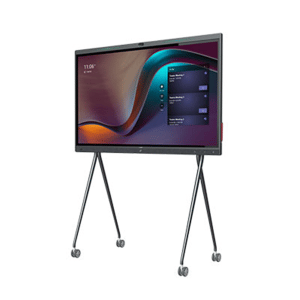
Logitech Rally Board 65

Logitech Rally Board 65

Crystal clear video, powerful audio, and AI-driven features in a 65-inch touchscreen.

🌟 Loaded with AI-powered video and audio: RightSight 2 and RightSound 2
🌟Deploy in Android, PC, or BYOD mode with Microsoft, Zoom, and Google Workspace
🌟4K video, 115-degree FOV
🌟6 beamforming mics and additional tweeters
🌟Embedded sensors provide room health and energy insights
🌟Remotely configure and manage with Logitech Sync
🌟Made with up to 41% next-life plastics, low-carbon aluminum, recycled fabrics, and FSC-certified packaging

Logitech Sight AI powered table top camera

Logitech Sight AI powered table top camera The AI powered table top camera

Help remote employees get the best perspective in every hybrid meeting with Logitech Sight. This AI-powered tabletop camera works hand in hand with Logitech Rally Bar or Rally Bar Mini to capture, identify and present virtual meeting attendees with the best sound and view of the meeting room action.

Compatible with leading video platforms:

Sight helps remote meeting participants see and hear everyone perfectly, so they feel like they’re actually seated at the table rather than sideline observers.

Working together with Rally Bar or Rally Bar Mini at the front of the room, Sight sits on the table and uses audio and video to intelligently detect, frame and present participants around the table.

By integrating with the leading video conferencing platforms like Microsoft Teams, Zoom, and Google Meet, Sight enhances the hybrid meeting experience by providing more dynamic and inclusive views of the meeting room action.

Two viewpoints for better perspective
Compatible with Rally Bar and Rally Bar Mini. Sight works with the front of room camera to detect conversations, capture audio and video, and present the best view of active speakers to remote participants.

NEW Dten available in 55-inch and 75-inch models

DTEN D7X 55-inch and 75-inch models

The all-in-one DTEN D7X transforms every meeting room into a modern workspace. Its powerful deep learning capabilities and AI features enable it to ensure great video collaboration experiences for your team, even without any user intervention. The D7X is also unique because of its enhanced compute capabilities, which enable it to perform multiple tasks at the same time and make sure that they are all run smoothly and efficiently.

With DTEN D7X, you can quickly connect any laptop to a single USB-C cable and start your video meeting. DTEN D7X features upgraded speakers, camera and microphones to create an enterprise ready professional meeting experience. It comes with Zoom and Microsoft Teams (via a free software download) so that you can join Zoom or Microsoft Teams calls on demand.

Listen up. Hear everything crystal clear with the new DTEN D7X 75″, a flexible, interactive display that’s as versatile as it is powerful. With state-of-the-art AI technology, it works with your team to optimize sound so each person can be heard, even in larger rooms like boardrooms. The upgraded speaker system features four times more sound and four new microphones ensure your quieter voices are picked up loud and clear.

The Future of Work

The Future of Work

The Future of Work | Have you got the best videoconferencing solution?
The world has changed. We’ve never used so much video, at home and at work. But in the rush to get teams working remotely, have you ended up with the best solution?

As hybrid work transforms into anywhere work, collaboration and employee experience goals continue to evolve. Work and learning spaces are changing to meet team expectations, and your technology must keep pace, with equal attention given to remote and on-site experiences. In short, we need to make anywhere work more
human-centric.

We have insights into strengthening the human experience in the workplace, including:

  • Our human-centric workplace how-to guide
  • Immersive spaces, platform interoperability, and VR design
  • In-person collaboration and events case study
  • Hybrid learning environments
  • Experience technology that moves the world
  • Technology partner solutions

Latest April Product Releases (Videoconferencing Equipment)

Latest April Product Releases (Videoconferencing Equipment)

Picture of e365 Superstore

e365 Superstore

Latest Product Announcements

The videoconferencing industry has grown exponentially and with numerous tools coming out every month, this will only continue to improve. We have compiled a list of the most useful videoconferencing equipment out there this month. 

Overview

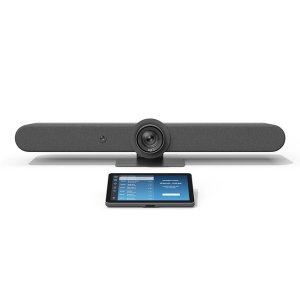
Logitech Rally Bar + TAP IP- Medium- Graphite

Logitech Rally Bar + TAP IP- Medium- Graphite e365 SuperStore are a premier authorised Logitech gold partner with Australian stock and warranty Logitech Rally bar are a Powerful All-in-one Video Conferencing Bar with Brilliant Optics and Automated PTZ. All-in-one Video Bar for Midsize Rooms. Simple to Set and Easy to Use. Only Quality Products. Trusted Australian Vendor. Friendly Customer Service. No Credit Card surcharge. Logitech Tap and Tap IP Compatibility Information  

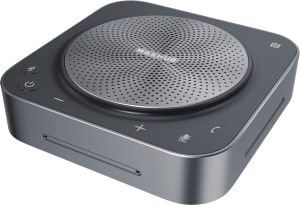
MaxHub Bluetooth Speakerphone UC BM35

MaxHub Bluetooth Speakerphone BM35 Unlock a new level of meeting clarity with the next-generation BM35 speakerphone. Crystal clear audio combines with a powerful pick-range to transform any small to mid-sized meeting space. Break free from the restrictions of wired devices with an agile, flexible solution that adapts as quickly as your team. 

In the home, the business office, or anywhere else, the BM35 is the ultimate part for clear conversations. Comes with 3 year warranty. Amplify Conference Quality with Superior Sound Portability and practicality come together in a powerful audio device, built for better meetings. The BM35 is optimized to keep human voices clear. Capturing every utterance in perfect detail, the BM35 empowers any team.

AVER CAM570 4K DUAL LENS PTZ AUDIO TRACKING CAMERA Stress FREE Installation

AVER CAM570 4K DUAL LENS PTZ AUDIO TRACKING CAMERA AVer CAM570 is a 4K dual lens camera with a 36X Total zoom PTZ camera and a second AI lens with 95˚FOV. Equipped with a built in microphone, CAM570 detects human voices up to 10M and offers audio tracking function. AI technology such as Smart Gallery and gesture control can capture every attendee up-close with premium video quality. 

Built-in Microphone Enables Audio Tracking Easily focus on active speaker with audio tracking mode and presentation mode. The camera will follow the speaker automatically or you can set up a preset point to focus on a specific area. The built in microphone picks up human voices up to 10M without being disturbed by a local speaker.

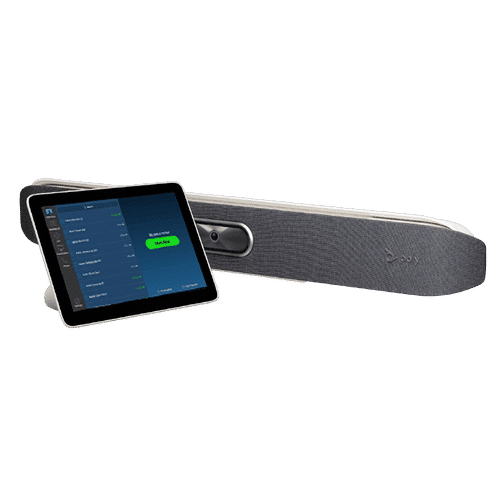
POLY Studio X50 & Poly TC8 4K Video Conf System W 3yr Poly Plus 24x7 Support

Poly studio X50

Poly Studio X50 with touch panel TC8 connects to Microsoft Teams and Zoom The Poly Studio X50 video bar delivers radical simplicity in a small, elegant package. In small- and medium-sized rooms, connect easily with whatever video collaboration software you may use. Experience full boardroom-quality audio, advanced camera capabilities, and quick wireless content—all in one sleek video bar. 

And say goodbye to unnecessary pucks, cords, and cables, along with the PC or Mac to drive the meeting, since the Poly Video OS runs the show. Easy to install, easy to manage. • Ideal for rooms of up to 8 participants • Surround everyone with the rich, legendary sound with stereo speakers that deliver immersive, room-filling audio • Dual monitor support ensures you have the ideal setup for room of many sizes • Be heard clearly with next generation microphone array

DTEN ME 27 All in One Zoom device

DTEN ME 27 All-in-One Personal Collaboration device for Zoom DTEN ME – the ideal solution for working from home Combining the technology in the DTEN ME with loom’s enterprise-quality software delivers the ideal solution for the home office. Simply login with your Zoom user account and create an instant office experience without any additional licenses. 

This solution integrates Zoom Meetings, phone calling, whiteboarding and annotation in a 27 multi-touch display built for the desktop. It is designed to keep your work­space clutter free and organized to deliver a professional meeting experience.

CommBox - Elegance XL Cart

CommBox – Elegance XL Cart Understatedly stylish fixed-height mobile stand with a pen shelf and designer hubless lockable castors. The cart suits CommBox screens up to 110″. Other features include 3″ heavy-duty locking castors and a handy pen and equipment shelf.

Maxhub v6 Collaboration Display - Maxhub C7530

Maxhub C5530

Maxhub v6 Collaboration Display – Maxhub C7530 Maxhub C7530 v6 Classic Series Maxhub C7530 The Maxhub C7530 – Integrating professional video conferencing, seamless screen-sharing, advanced whiteboard technology, and a brilliant audiovisual experience, is the ultimate corporate-collaboration assistant. 

Drive productive teamwork and increase organizational efficiency with this meeting-room must-have. Installation and Integration Australia Wide Total Solution, Minimal Setup – Maxhub C7530 A complete, seamless design fulfills every meeting requirement, including built-in camera, mic, and touch panel. Whether video conferencing or hosting a local discussion, it’s as easy as plugging in your power cable.

Cisco Webex 8875 IP Phone - Corded - Corded - Wi-Fi, Bluetooth - Desktop - Carbon Black - VoIP - IEEE 802.11a/b/g/n/ac - 2 x Network (RJ-45) - PoE Port

Cisco Webex 8875 IP Phone – Corded – Corded – Wi-Fi, Bluetooth – Desktop – Carbon Black – VoIP – IEEE 802.11a/b/g/n/ac – 2 x Network (RJ-45) – PoE Port CP-8875-K9= Webex 8875 IP Phone – Corded – Corded – Wi-Fi, Bluetooth – Desktop – Carbon Black Webex 8875 IP Phone – Corded – Corded – Wi-Fi, Bluetooth – Desktop – Carbon Black – VoIP – IEEE 802.11a/b/g/n/ac – 2 x Network (RJ-45) – PoE Ports Enjoy superior voice communications while retaining the convenience and user-friendliness over Internet Uses VoIP technology to transfer audio signals over the Internet while circumventing high toll charges by telephone companies

Yealink MeetingBoard 86 inch for MS Teams

Yealink MeetingBoard 86 inch Collaboration Display For Microsoft Teams e365 SuperStore are a premier authorised Yealink Platinum partner with Australian stock and warranty Simple to Set and Easy to Use. Only Quality Products. Trusted Australian Vendor, Many Payment options, Same Day Delivery, Friendly Customer Service. 

No Credit Card surcharge. (stand available separately) Unlock Creative Teamwork The Yealink Meeting Board collaboration display effectively facilitates powerful digital collaboration by combining everything in the room, from the computing unit to a wide 86-inch touchscreen display, 4K camera, microphones arrays, speakers, and built-in Microsoft Teams. The Android 10 OS and an Octa-core high-performance chipset offer maximum performance.

Facebook
Twitter
LinkedIn
Picture of e365 Superstore

e365 Superstore

e365 Superstore are experts in video conferencing equipment. We have completed thousands of projects over the last 25 years and we are passionate about virtual communications. Click here to find out more about our company.

Videoconferencing Benefits and Tips

Videoconferencing Benefits and Tips

Picture of The e365 Team

The e365 Team

Benefits of Videoconferencing

Videoconferencing has transformed over the years and it has now become a need for numerous companies. With the disruption of the pandemic this multiplied the demand for videoconferencing equipment. Currently, there are a large number of employees who still choose to work from home or take part in hybrid work.

The challenge lies in how modern businesses are going to take advantage of this opportunity and support their employees who are based in different locations.

Throughout this article we will cover the essentials in improving your online meeting experience and provide some tips to implement with your team in the next meeting.

Table of Contents

Overview

Videoconferencing has been around for over 30 plus years and in its infancy videoconferencing systems would cost as much as $250,000 for a room setup. The investment in equipment was rationalised in the same way it is today. Whilst the more obvious benefits of reducing travel, connecting teams and improving collaboration is still pertinent to todays workforce, there are so many more added benefits for a fraction of the price.

This includes providing employees with flexibility, increasing personal productivity and enhancing collaboration. However, there have been only a  few articles outlining how to use this technology and maximise the value of your investment in a videoconferencing system.

How to Improve Your Experience

It’s evident that taking part in a Zoom or Teams meeting can’t be compared to a face-to-face meeting. The environment is completely different with the online environment being more restrictive. However, there are advantages to online meetings that are absent in face to face meetings. According to a recent study teams meeting online are more likely to make definitive decisions and meetings are less likely to sway off in tangents. 

This saves time, money and resources as the agenda is followed closely. A drawback from an online meeting is the lack of daydreaming or disconnect opportunities. This is important for inspiring imagination and creating new ideas. Online meetings require focus on the speakers, whilst in person meetings participants feel connected within the same physical environment and feel free to let their mind wander. 

The good news is that there are lots of alternatives to get your team back to brainstorming. These include sharing content on screen with apps like miro, allowing each participant to share their content in real time to the chat and many other options. Research has indicated that this will significantly increase memory to what was discussed in the meeting as well as, increasing morale as each participants feels valued.

Best Practice for eMeetings

Maintaining continual attention in normal meetings can be a challenge and in video meetings this can be even harder. Luckily there are a few habits you can start doing to improve your recall and your relationships with your work colleagues.

According to recent research, a key difference between participants with a healthy workplace relationships throughout the pandemic and those that didn’t have this experience, was their focus. By focusing on non verbal cues and body language these participants were able to receive messages much more clearly and truly understand their colleagues.

So it’s important to encourage your team to turn on their cameras and focus on your teams body language and non verbal cues. Although, this can be particularly difficult if the video quality is not clear or the connection to the internet is slow. If you do experience bad internet quality, you can avoid this by attaching your Ethernet cable directly into your router. Another integral part of the online experience is the ability to share information.

So it is recommended that companies and individuals who are working from home or partaking in hybrid work invest in great quality equipment.

Is Videoconferencing Important?

Offering hybrid work or work from home options to employees can improve morale and actually enhance productivity. When employees are allowed to work from home they can be more flexible in organising their time and prioritising work. Employee’s that are offered these options also report higher job satisfaction and are less likely to switch job roles. 

With increased flexibility employees gain an increase in focus and they are able to prioritise work tasks more easily. It also provides the opportunity to collaborate with individuals across the world and build key relationships. With reduced travel costs and an increase in time productivity significantly increases which accelerates business growth.

It’s clear that communicating online can be challenge and communicating effectively does not come naturally. It takes a conscious effort from all parties to create a great environment that will foster creativity and improve business performance. 

Setting Up Your Space

A large part of the user experience comes from preparation and setting up your environment. It is important that you set up right by having appropriate lighting through using natural sunlight or a standard desk lamp to start off with before investing in professional lighting equipment. 

Alongside this is investing in a professional quality video camera. The camera on your lap-top or mobile won’t provide you with the clarity that you need. This makes a difference in instant communication. If you can read a colleagues body language more clearly or hear the tone of their voice it transforms how a message is received. So make sure you invest in a professional set up. 

Ensure your desk has enough space to place a notebook you can write on, as the more contact points users engage in the more points of memory the brain has to recall information from. So don’t forget about writting physical bullet points in every meeting.

Summary

That’s a wrap on all the different tools and techniques you can use to improve your experience online from established industry brands and scholarly researchers. Our aim to to improve the videoconferencing experience for companies worldwide and educate users on how to use this technology to gain the most value from your investment.

If you enjoyed this article, Sign up to our blog list below to be notified of any new developments within the videoconferencing industry.

Picture of e365 Team

e365 Team

The e365 Industry Blog covers all of the latest trends and developments within the video conferencing Industry. With the industry increasing its technological capabilities, it can be difficult to ascertain the core benefits to users in both the long and short term. Our blog allows users to know in an instant, how this technology will add value to their business and their online relationships. Sign up to our email list below, to be notified when we post our next blog and newsletter. 

Don’t Email me, Video Me!

Hate email?

If you’re in the corporate world, chances are you have an affliction like I do. Five hundred emails, 24 hours a day, two means — portable devices and your desktop — to receive them. Email has effectively beaten the telephone as a preferred way to communicate. And if you think I’m exaggerating, consider this: Intel recently noted that in exactly one minute’s time, more than 204 million emails are sent. That means more than 12 billion emails land at their destination within an hour!

Email may currently be our number one means of communication, but it is flawed. The world of email has become impersonal and sometimes even hostile. How many of us have received the dreaded “all caps” emails where you can feel the sender screaming through your screen? Often people seem too comfortable saying things in an email that they would likely never say in person or via live video.

And, while email ensures that we are in constant contact with colleagues and clients, for just some of the reasons I’ve just stated, it doesn’t necessarily mean it is better.

We’re a mobile business force — one that enjoys the comforts of a work-anywhere lifestyle, whether from the train, the back porch, you name it. And our consumer technology like virtual meetings, video conferencing and other telecommuting technology allows us to do this. We also rely heavily on social media platforms — ones with video chats, picture exchanges, and 140 characters that tell the whole story. So while just eight percent of the workforce is using these tools currently, this is the future of collaboration.

We see it every day in the way our future workforce — teenagers — keep in touch. It isn’t through email or voicemail, its Snapchat, Instagram and Whatsapp. The younger generation uses video daily in their communications, suggesting that today’s CIO needs to be thinking about opening up the corporate intranet for such video collaboration that is device and technology agnostic. Not only is it the future, it’s good for business and promotes global teamwork.

As video collaboration becomes more mainstream how global companies connect offices will impact mobility in a whole different way.  our government is expected to reduce its travel costs by 50 percent across agencies. Why shouldn’t video conferencing tools encourage enterprises across industries to follow suit? And, while some are currently connecting on devices tethered to their desks, the world is becoming more mobile. Major Telephony companies see the mobile market at 6.4 billion subscribers and 50 percent of those are smart phones. With those numbers only expected to grow, more devices will enter the market with video capability — leaving video as the major contribution to mobile data traffic by 2022.

With most consumers buying mobile devices for their bigger screens and HD video capability how can CIOs replicate quality consumer experiences and ensure employees have what they need to be successful?

They’ve tried. Believe me. But one of the biggest obstacles to integrating an employee’s workflow — and making it more of the consumer experience they desire – is the use of proprietary solutions.

For the last 20 years, we’ve seen different communication channels – everything from telephony and instant messages to the email and voicemail we get today. We’ve made improvements, but we often bind ourselves because of separate platforms that cannot co-exist. Proprietary technology is costly, often not scalable and thus, IT departments cannot make it customized for their needs.

My suggestion? Let’s open it up! Cloud Videoconferencing — offers CIOs and employees an option that appears to be traditional video conferencing without being tethered to a desk or platform.

Phone calls are a thing of the past. And I would wager email is on its heels. We’re on video now. We’re on social media now. It’s a multimedia, multiplatform, multi-device world.

Today is already tomorrow; video and social media use — most prominent already in the consumer industry- – will become as natural as picking up the phone or sending an email thanks to increased use of Cloud Videoconferencing. And that’s good news. Now if you’ll excuse me, I need to respond to the 147 emails I’ve received while writing this…


Determine Your Video Conferencing Requirements with These Questions

logo

Integrating video conferencing into your organization is quickly becoming essential. However, a top quality video conferencing system can be expensive. Therefore, in preparation for deciding on a provider, and choosing a plan for your company, it is well advised that you define your video conferencing requirements well before you begin to draft any contracts with vendors.

The following list should help you narrow down which types of video conferencing systems and equipment you should consider adopting when moving forward with your purchase. Make sure you consult both your management and IT departments in order to cover all bases.

There are three broad areas you should take a look at with regards to your video solutions.

The first is business requirements – the direct business goals that video conferencing should be looking to facilitate.
Next, there are functional requirements; specific details such as number or users and/or overall functionality that feed back into the business goals.
The final requirements to consider are technical. This may include any limitations you have in regards to space, systems, and bandwidth. Take advantage of the deep knowledge your IT team has in these areas before moving forward. Then ask yourself the following:
What is your organization looking to achieve with video conferencing solutions?

This is first and foremost the most important question you must ask before going forward with a video conferencing solution. The wider strategy your team outlines will be a fundamental help in determining the type of video conferencing solution you choose.

What is your budget for video conferencing solutions?

Your budget should be determined by assessing how valuable the solution will be to your operations. In addition, look at where the solution will reduce costs and improve productivity i.e. travel costs, scaling knowledge, connecting remote workers etc.

How many users does your video conferencing system expect to support?

Knowing how many users your organization will have can help you with issues such as bandwidth and pricing plans. However, knowing how much you are likely to grow in the future is just as important.

Where will your users be located?

Will your users be based in the main office or will they be remote? Remember to look to align your bring-your-own-device (BYOD) strategy with the solution to make it simpler for remote workers. Also, look at how many meeting rooms you wish to convert into video conferencing suites and, of course, don’t forget to look at all of your office and subsidiary locations.

Do you have in-house IT support or will you need to outsource?

Most vendors should be able to offer you IT support, though this will be at an extra charge. If you are fortunate enough to have onsite IT staff members, they must familiarize themselves with the solution.

Cloud or on premise video conferencing?

It’s not just applications and storage that are offered from the cloud, it is now possible to dispense with expensive video network infrastructure and have video conferencing and calling delivered as a service. This option is by far the most scalable and affordable. In very few cases, organizations prefer to have on premise infrastructure deployed behind firewalls. Therefore, engage with your IT to understand the pros and cons of both environments.
When you are going to implement a video system, follow these questions and assess your business goals to find a video conferencing solution that best suits your company.

At eVideo, we have a complete range of cloud video conferencing services and a portfolio of hardware for meeting rooms systems and software for desktop and mobile devices.

To find out more visit us at www.evideo.com.au   or 1800 11 387

Sydney | Melbourne | Gold Coast | Brisbane| Canberra | Adelaide| Perth


Huddle Rooms and Cloud Videoconferencing

Make Your Business More Productive, with Huddle Room Equipment, Products and Software

If you haven’t been seeing the productivity you want out of your employees and your business as a whole, consider that the layout and design of your office space might be to blame. In recent years, many companies have started trying to innovate their office designs to pursue the look and feel of a modern office.

In many cases, this idea of a ‘modern office’ results in an open concept design where most employees work side by side or across from one another, clustered together in one big main room. Maybe there are a few standalone offices for senior members of the staff, or a few conference rooms for meetings, job interviews and the like. For the most part, though, the office is designed as an open floor plan.

The Problems with the Modern Office Layout

There are two core problems with this kind of office design, and you can solve both of them (at least partially) by investing in huddle room equipment for your business.

The first issue is that open workspaces, while they can drive collaboration and promote a teamwork mentality, can also create loud, distracting environments where very little actual ‘work’ gets done. There is too much chaos and not enough direction.

The second issue, meanwhile, is that the office’s open concept design means that there aren’t many other rooms for team meetings or collaboration sessions. There are a couple of larger conference rooms or boardrooms, but those are intended for more important meetings—not for gatherings of smaller teams or segmented departments.

huddleroom1

The Benefits of Using Huddle Room Equipment

Investing in huddle room products is an effective way of reversing these negative impacts of an open concept office. Huddle rooms are smaller rooms in an office space that act as less formal conference rooms. They are maybe the size of a traditional office but come equipped with key electronics and software to allow for video conferencing, Power Point presentations, idea brainstorming and more. Best of all, the size of these rooms makes them perfect for smaller group meetings.

Having huddle room equipment and software in your office helps restore the sense of collaboration often lost amidst the madness of an open floor plan office. When your individual teams can regularly go into smaller rooms to have meetings or conversations, it removes some of the noise and chaos from the central work area. It also keeps the conference rooms and boardrooms open, available for larger gatherings.

Because huddle rooms are smaller than standard conference rooms, they cost less to outfit with key technology and software products. As a result, turning three or four smaller rooms or offices throughout your workspace into huddle rooms might be more affordable than you realise.

At eVideo Communications, we specialise in huddle room equipment and huddle room software in Australia. We can help you design and implement a huddle room strategy in your office. We predict you will start noticing the benefits right away.

To start collaborating with the eVideo team, call us today on 1800 111 387

Ultimate guide to Zoom-Microsoft Teams room solution.

Face-to-face interaction is critical in business communications but teams are becoming increasingly dispersed. The Video Conferencing systems on the market now are designed with smaller huddle rooms in mind

Our Team are

  • Highly experienced Unified Communications, Videoconferencing, Collaboration Solutions Specialized
  • Offer a consultative approach
  • Highest product and application knowledge
  • Totally technically proficient
  • Superior level of networking competency, service, support & customer satisfaction

Our Video/Audio/IP telephony/Unified Communications solutions include:

  • Cisco, Logitech, Crestron, Poly, Yealink  Video Conferencing endpoints for Meeting Rooms, Cloud, On-premise and Hybrid Solutions, Microsoft Teams, Zoom, Google meet.
  • Integrate your Boardroom solutions
  • Professional services, Managed Services.
  • Audio Visual solutions (Touch boards, Projectors, Trolleys etc.)

Please let me know if you would like one of our team to discuss with you and  provide the latest Communication solutions you and your organisation.

Order on line from e365 Distribution the Logitech Rally Bar

Logitech Rally Bar

Powerful All-in-one Video Conferencing bar with Brilliant Optics and Automated PTZ.

All-in-one Video bar for Midsize Rooms. Simple to Set and Easy to Use.

Only Quality Products from e365. Award winning Logitech Australian partner with Australia-Wide offices.

Award winning Customer support & Service. No Credit Card surcharge.

We Specialize in Both Cloud-Based and On-Premise Technologies.

  •  24/7 Help Desk *     Maintenance and support options
  •  Australia-Wide installations  Onsite support & Training *
  •  Offices in Sydney-Melbourne-Brisbane-Gold Coast-Perth-Adelaide-Canberra.
  •  Free demonstrations & Trials * Video chat consultancy
  •  Customer Promotions & Loyalty Program
  •  Special discounts for Health, Education, Government & Non for profit.

*Subject to conditions and vendors.


What is a MUST to include Todays latest Visual technology.

eVideo communications 

Video Conferencing and high-impact audio-visual technology is the Answer.

Today’s organizations thrive in a creative, agile and responsive working environment, where people want to engage with each other in real time – wherever they are.

Our forward thinking customers require not only specific technology, but innovation, transformation and a cultural shift towards a new way of delivering, and interacting with, information.

Implementing this type of environment can prove to be challenging due to the complexity and financial requirements of a flexible Workspace.

Business Benefit

Working environments are no longer standalone rooms with simple display screens or a flipchart. They are areas where we collaborate to create an environment where people can deliver more value to the business.

Business benefits include tangible cost savings, savings in time and office space, along with increased engagement. Video Conferencing and VCaaS (Cloud) reduces complexity of multi-manufacturer video equipment and make booking a VC as easy as a meeting, driving utilization.

Today we demand interaction and collaboration tools that engage with our customers, staff, partners etc. that provides a multi-layered experience and brand awareness.

Boardroom Management, potentially linked to room integration, automates the environment for whatever type of meeting is taking place.

Tangible Savings

We help you transform your business through the implementation of innovative audio-visual and video solutions with the ability to achieve tangible cost savings or drive customer engagement.

Virtual teams enable collaborative working, increasing the efficiency of your business and reducing the time to market.

More and more businesses are using digital signage as part of their communications and information strategy. Deployed in prominent areas such as receptions, staff restaurants, office spaces, digital signage enables engaging, dynamic and tailored content.

Video Walls and large format screens are becoming common, centrally controlled and distributed across a geographically dispersed estate.

Our Capability

Our team works closely with customers to design and implement a variety of technology solutions, including:

  • Video Conferencing – Our Professional Services team of consultants, project managers, engineers and support operatives integrate existing Videoconferencing or deploy additional endpoints.
  • VCaaS – Hosted Virtual Meeting Rooms provide access video endpoints, along with software based systems such as Microsoft Lync, to a single Video meeting room. Additionally we provide concierge service and video eCare helpdesk to assist with setup, activation and troubleshooting.
  • Audio – Boardrooms, Meeting Rooms, Huddle rooms, Executive offices.
  • Digital Signage – Enabling the projection of brand messaging, information and targeted adverts using a series of media displays or video walls;
  • Control Systems – Including LCD displays, projectors, videoconferencing systems, lighting.
  • Display – Projectors, LCD, LED and plasma displays can be used in a wide range of environments, from corporate board rooms, meeting rooms, command and control centers;


We are leading the way in  providing a focus on design, implementation and management of Video Conferencing and high-impact audio-visual technology throughout Australia and Globally enabling our customers to be ahead of their competitors.


Latest Home Office-Meeting Room Collaboration bundles

Home Office-Meeting Room Collaboration solution
Samsung FLIP 55” touch screen with Logitech RALLY BAR MINI White BUNDLE Special pricing ends soon.

Save $$$ on this Bundle    We can supply and Install Australia-Wide.

https://www.e365.com.au/product/samsung-flip-55-with-logitech-rally-bar-mini-white-and-1x-logi-tv-mount-for-video-barbundle/


Sign Up For Our Newsletter to Receive Regular Specials!